



How One Young Woman Built a Mountain Bike Community From the Ground Up in Avery, California
In a tiny mountain town most people drive through without noticing, a young woman in her twenties quietly built something extraordinary From Dirt Roads to Destiny.
Not just a bike shop, but a community, a culture, and a gathering place for riders who didn’t even realize they were searching for one.
Tucked between the forests and winding roads of California’s Sierras sits Avery, California, population small enough that locals joke you can blink and miss it. A mobile home park. A post office. A bar. A few scattered buildings. And now, one of Northern California’s most authentic rider-driven mountain bike shops: Mountain Aloha MTB Co..

At just 26 years old, shop owner April never set out to become a symbol of female entrepreneurship in mountain biking. She simply saw a void, and had the courage to fill it.
“I missed that feeling of community from the bike shop I worked at in Santa Cruz,” she says. “There wasn’t really a mountain bike culture up here yet. I wanted to create that.”
And she did.

A Small-Town Girl With Big-Mountain Vision
April grew up in Tamarack, California, a tiny mountain community in Calaveras County with a population of nine people.
Nine.
To get to high school, she commuted 45 minutes each way through the Sierras every day. By the time graduation came, she was ready to leave home and experience something bigger From Dirt Roads to Destiny.
She moved to San Luis Obispo to study kinesiology, hoping to dive into surf culture, fitness, and outdoor adventure. But the college-town lifestyle didn’t fit.
Soon after, she relocated to Santa Cruz, and that’s where everything changed.

Working at Trail Head Cyclery introduced her to the heartbeat of mountain bike culture: the camaraderie, the creativity, and the energy of riders gathering around a shared obsession.
Then came the ride that changed her life: a demo ride on the legendary Flow Trail in Demo Forest.
“I immediately fell in love,” April says. “That was it for me.”
At the time, she was just 19 years old.
The Return Home
Life has a strange way of pulling people back to where they belong.
After meeting her now-husband, who also happened to grow up in the same hometown, the couple made the decision to move back to the Sierra foothills to buy a house and start building a future together.
But returning home came with uncertainty.
“I was bummed,” April admits. “I thought, there goes mountain biking.”
At the time, there was no real bike culture in Avery or the surrounding communities, no established riding scene, no central gathering place, no destination bike shop. What existed were scattered riders — mostly older men riding quietly on local trails few people even knew about.
There was potential, but nobody had connected the dots yet.

“It Was Waiting for You”
Around the same time, April’s parents were selling their longtime family business, a bed-and-breakfast in Tamarack.
Then an old vacant building came up for sale: a former home loan office that had sat mostly unused for years.
When April talks about that moment now, it almost sounds like fate.
“It was kind of a meant-to-be thing,” she says.
Her parents believed in the dream enough to buy the building. April and her husband took on the responsibility of building the shop from the inside out, pulling nearly $80,000 from retirement savings while still in their twenties to make it happen.
“It was stressful,” she says. “We were putting everything into this.”
For a year and a half, she navigated permits, rezoning issues, septic complications, and endless county paperwork. Meanwhile, she was recovering from a devastating skateboarding injury that shattered her leg and forced her to step away from a physical therapy internship and college plans.
Still, she kept going.
And in her mind, she could already see the shop before it existed.
“I had a complete vision,” she says. “I knew exactly where things were going to go.”
The Industry Didn’t Believe Her

Opening a bike shop sounds romantic until you try getting actual bike brands to trust you.
As a young woman with no established business history, April hit wall after wall.
“I got turned down by probably 10 to 15 companies,” she says.
Bike brands demanded references. Suppliers questioned her experience. Industry gatekeepers treated her like someone playing pretend.
“How do I open a bike shop if nobody will give me a chance?” she remembers thinking.
And then came one pivotal phone call.
The Call That Changed Everything
While pregnant with her daughter and fighting to establish the business, April reached out to legendary custom frame builder Miles, founder of Mullet Cycles.
She left a voicemail not expecting much.
Instead, she found an ally.
“He said, ‘That’s so unfair. You should absolutely be doing this.’”
More importantly, he believed in her.
He connected her with distributors, vouched for her credibility, and helped legitimize Mountain Aloha MTB Co. within the industry.
That support changed everything.
“We went from being just a store to being an actual bike shop,” April explains.
Custom builds. Suspension upgrades. Boutique components. Dream-bike conversations. Not a corporate chain. Not cookie-cutter retail. A core rider shop built by riders, for riders.
Building a Community Where None Existed

Perhaps the most remarkable part of April’s story isn’t the business itself.
It’s what happened around it.
At first, the local riding scene was fragmented. Riders existed, but they weren’t connected. Trails were poorly marked. Visitors had no idea where to ride.
So April started leading group rides.
Friday night rides became a ritual. Her mom would watch her daughter while April gathered riders at the shop before heading out onto the trails. Sometimes 20 people would show up, teenagers, parents, older riders, new riders, and experienced riders alike From Dirt Roads to Destiny.
One night became a defining moment.
“I remember texting my husband after,” she says. “Twenty people. No crashes. No mechanicals. Everyone had an amazing time.”
After the ride, everyone gathered back at the shop drinking beers on the deck as the sun disappeared behind the trees.
“That was the moment where I thought, okay… I can do this.”
More Than a Bike Shop

Today, Mountain Aloha MTB Co. has become far more than retail space.
It’s become a catalyst.
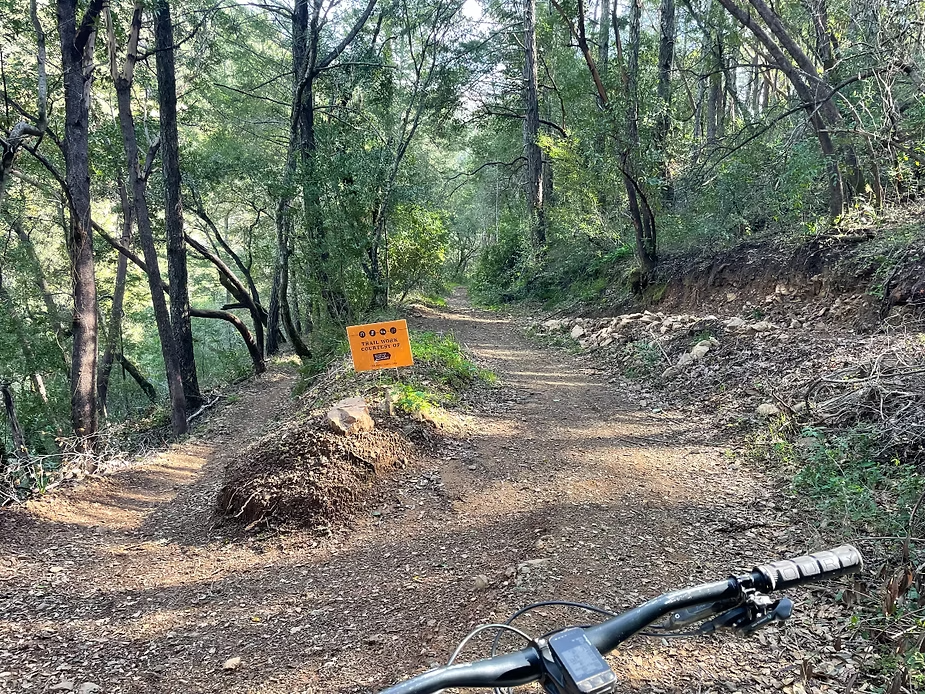
The nearby Arnold Rim Trail system is growing rapidly, fueled by grants, advocacy, and increasing rider awareness. Local trail organizations are improving signage and trail access. Riders now travel from Sacramento, Stockton, and beyond to visit the area.
And more women are riding than ever before.
“I’ve gotten a lot of wives and girlfriends into mountain biking,” April says proudly.
That impact matters because, for many riders, walking into a bike shop can feel intimidating, especially for women. But Mountain Aloha feels different: cleaner, more welcoming, and more intentional.
People notice immediately.
“They’ll say, ‘I can tell a girl runs this shop,’” April laughs.
Leading Without Pretending

One of the most refreshing things about April is that she doesn’t pretend to be something she’s not.
She’s honest about what she does well. She’s not the head mechanic, she’s the visionary, the connector, the organizer, and the culture-builder.
“The guys work on the bikes,” she says. “I do everything else.”
And somehow, that “everything else” became the soul of the entire operation.
Customers ask for her by name when they call. Locals trust her recommendations. Riders seek her guidance. Even when her husband is standing nearby, customers eventually discover the truth.
“He tells them, ‘Go talk to the boss.’”
A Hidden Gem in the Sierras

The beauty of Mountain Aloha MTB Co. is that it still feels undiscovered. The outside of the building is understated — almost invisible. But inside is something entirely different: custom builds, downhill helmets, rider stories, maps, tools, coffee conversations, trail beta, and community.
April intentionally resisted turning the shop into a flashy commercial operation. “If you know, you know,” she says. The shop feels more like a secret handshake among riders than a polished retail machine, and maybe that’s exactly why it works. Because authenticity cannot be manufactured, it has to be lived. From Dirt Roads to Destiny.
The Future of Avery
Mountain biking has transformed places like Downieville into destination communities. April believes Avery can evolve in a similar way, not by becoming overcrowded or overdeveloped, but by embracing the outdoor culture already rooted in the mountains.
“Mountain bikers support local economies,” she says. “They buy food, beer, gear, They stay places, They become part of the community.”
And now, thanks to one determined young woman, riders finally have a reason to stop in Avery instead of driving straight through it.
“Sometimes You Learn More Outside the Classroom”
April never finished her kinesiology degree.
Instead, she built a business, raised children, created a riding culture, developed trail advocacy momentum, led group rides, built industry relationships, and helped redefine what leadership in mountain biking can look like, all before turning 27.
“Sometimes you learn more outside the classroom than inside it,” she says.
That lesson is written all over the walls of her shop.
And maybe that’s what makes her story so powerful.
Not because she waited until she felt fully qualified.
But because she started anyway.
From Dirt Roads to Destiny.
She saw something missing in her community and chose bravery over hesitation. Somewhere between the dirt roads, custom bike builds, Friday night rides, and Sierra sunsets, a bike shop became a movement.